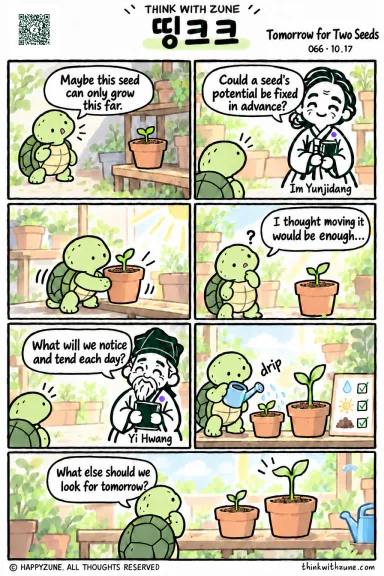
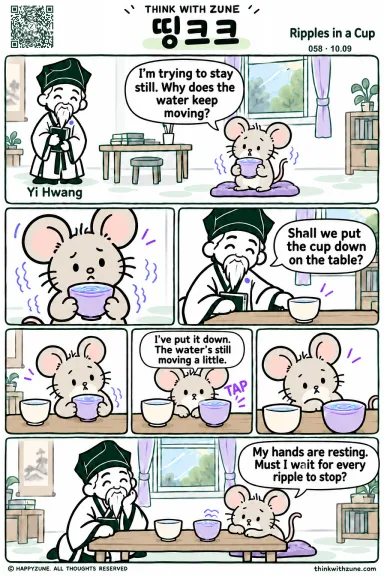
T'OEGYE YI HWANG
He places kyŏng, or reverent mindfulness, at the center of cultivating the mind and joining learning and reflection to daily conduct and responsible government.

Other names and spellings
퇴계 이황 · 이황 · 퇴계 · Yi Hwang · Toegye Yi Hwang · T'oegye · Toegye
Core ideas
Works & sources
Yi Hwang, Ten Diagrams on Sage Learning × Im Yunjidang, The Collected Works of Yunjidang — an editorial synthesis of the two works, not a direct quotation · Seonghak sipdo, Diagram 10, ‘Diagram of the Admonition on Rising Early and Retiring Late’ — Chen Bai’s text, diagram and commentary by Yi Hwang · Ten Diagrams on Sage Learning, Presentation Address, Michael C. Kalton translation
T'OEGYE YI HWANG, a first reading
Yi Hwang explored how cultivating the mind and learning can lead to ethical conduct in daily life.
Gyeong: reverent attentiveness: what does it mean?
Gyeong is a cultivated attentiveness that keeps the mind gathered and watchful. It involves remaining alert to ethical responsibilities in dealing with people and affairs, beyond concentration alone.
Explore the thinker and concept ↗